How to Price Film for Weddings: True Cost, Scans and Profit
The short answer: to price film for a wedding, add up your true cost (the film, the lab's developing and scans, shipping, a small gear fund and your time), then add the profit that fits where you are with film, from breaking even while you are learning to about 50 percent when couples book you for it. Quote the total per roll, so it is simple for your couples to understand. My Film Pricing Calculator does all of this math for you.
In this guide
- Why film is worth offering, and worth pricing well
- What one wedding's film really costs you
- Film scan options, explained
- How to price film so it pays you back
- How to make film and digital feel like one gallery
- How I shoot and send film for my weddings
- How to choose a film lab
- Film pricing questions photographers ask
- Your next step
Why film is worth offering, and worth pricing well
Film is one of my favorite parts of a wedding day. I love the sound of my 35mm while everyone is getting ready, and the few slow minutes I spend with my 120 camera and the two of them at golden hour. Couples notice it too. They ask about film on our first call, they choose film images for their walls, and years later they tell me those are the photographs that bring them right back to how the day felt.

Film also asks more of us than digital does, and that is worth honoring in how we price it. Each roll is bought, loaded, labeled, numbered and packed, then sent to a lab, ordered with the right scan settings and waited on. When the scans arrive, they are sorted, edited to sit beside the digital images and placed in the gallery, and the cameras themselves need care and repairs along the way.
When film is priced as "what the lab charged me," all of that care is given away. When it is priced thoughtfully, film becomes something you can keep offering for years, to couples who adore it, in a way that supports your business instead of quietly costing it. This guide walks through exactly how I think about it, from what one roll truly costs to every option on a lab's order form, how prints shape the scan size you need, and how to set a price that grows with the number of rolls you shoot.
A little about why I wrote this. I have photographed weddings for about seven years, from Raleigh and Charleston to Italy, France, Greece, Norway and Thailand, with film and digital side by side the whole time. My work has been featured in Carats & Cake, The New York Times and People, and film is one of the reasons couples and planners reach out to me. This is the guide I wish someone had handed me when I first started bringing film to my weddings.
If you would like to skip ahead and see your own numbers, my Film Pricing Calculator does all of this math for you. Fifteen labs are already built in, you pick the film stocks you actually shoot, and you can save each wedding by name to come back to.
The Film Pricing Calculator opens soon. Follow along on Instagram at @hannahrosserphotography to hear the day it goes live.
What one wedding's film really costs you
The true cost of film is everything it takes to get a finished film image into your couple's gallery. I think about it in six parts, and I would encourage you to write your own numbers next to each one.
- The film itself. What you pay to buy each roll. Color and black and white are priced differently, and 35mm and 120 cost different amounts too, so price each one on its own. Buying a five pack usually brings the price per roll down a little. One note on names: since March 2026, the same Portra film is also sold as Kodak Ektacolor Pro (160, 400 and 800), so you may see either box on the shelf (more in the questions below).
- The lab. Most labs charge for developing and for scanning, sometimes as one price and sometimes as two separate prices. The scan size, the file type, rush, borders and pushing or pulling all change that number, so it is worth reading your lab's order form closely (more on every option below).
- Shipping. The label to send your film in, and sometimes a fee to send your negatives back. Some labs offer their own mailing service or a free prepaid label, so check before you buy postage.
- A gear fund. Film cameras and lenses wear out, repairs are expensive, and some parts are no longer made. A suggested amount is $2 to $5 for every roll you shoot, so a broken camera is covered by a fund instead of by your profit.
- Your time. Loading and labeling rolls, packing and shipping, filling out the lab order, downloading and sorting scans, editing them to sit beside your digital images, and adding them to the gallery. Add up what film adds to one wedding for you, and know that this time has real value.
- Your profit. The amount you take home for offering something special. This is separate from your time, and it is what makes film worth doing.
A worked example
Here is a wedding with 10 rolls of 35mm and 5 rolls of 120, all Kodak Portra 400, sent to theFINDlab for Large Frontier scans. The film and lab prices below are the starting prices built into the calculator, checked November 2026, so please use your own.
| What | How it is figured | Cost |
|---|---|---|
| 35mm lab, Large scans | 10 rolls at $26 | $260.00 |
| 120 lab, Large scans | 5 rolls at $23 | $115.00 |
| Portra 400, 35mm | 10 rolls at $18.66 | $186.60 |
| Portra 400, 120 | 5 rolls at $16.08 | $80.40 |
| Shipping to the lab | one label | $20.00 |
| Lab and film only | $662.00 | |
| Gear fund | 15 rolls at $3 | $45.00 |
| Your time | 2 hours at $50 | $100.00 |
| True cost | $807.00 |
If this film were priced at only the lab bill and the film, $145 of real cost would go uncovered on every wedding, before your craft is valued at all. Closing that gap is what this whole guide is about.
Film scan options, explained
A lab's order form can feel like a long list of choices, and every one of them changes your cost. Here is what each option means and how I choose.
Frontier or Noritsu
These are the two scanners most wedding labs use. Frontier scans are known for warm, soft color and are a favorite for skin. Noritsu scans are larger and more neutral, with crisp detail. Both are excellent, and many labs offer both. I prefer the Frontier look for my weddings, and some labs charge a little more for it, so check your lab's list.
Scan size, and why prints matter most
Scan size is the decision that matters most, because your couples will print these. Most will order a few small prints, and some will order wall art as large as 24 by 36 inches.
- Small or standard scans are lovely for online galleries, sneak peeks and prints up to about 8 by 10 inches.
- Large scans give you room for bigger prints, albums with full spreads, and cropping.
- The largest scans are what you want for wall art. A 24 by 36 print looks its best from an image of roughly 3600 by 5400 pixels or more, since large prints are viewed from a few feet away.
Every lab names its sizes differently (Regular, Large, XL, Ultra, or file sizes like 20 MB), so look for the pixel dimensions on the price page when they are listed. If a couple orders a large print of one image from a smaller scan, most labs can rescan that single image at their highest resolution for a small fee. I typically order large scans for every wedding, so a couple can order a beautiful 11 by 14 from any frame. As a guide, an 8 by 10 needs about 2400 by 3000 pixels, an 11 by 14 about 3300 by 4200, and a 16 by 20 about 4800 by 6000 for the sharpest print up close, while a 24 by 36 looks lovely from about 3600 by 5400 because it hangs farther away.
JPEG or TIFF
A JPEG is smaller and works well for galleries and most prints. A TIFF is the same size image with no compression, so it holds more color and tone when you adjust it in editing, but the files are much larger and some labs charge more for them. I prefer TIFF scans for weddings because I edit my scans so they sit beside my digital images in one gallery, and the extra information makes that easier.
Custom scans and corrections
Many labs offer a standard scan and a custom or premium scan, where a technician corrects color and exposure by hand and can follow your notes. I always order custom scans, and I send the lab a few of my edited digital images from the same wedding as a reference so the color feels consistent. If your lab has a profile for you, a simple note about your preferred look (warm or neutral, lower contrast, how you like skin and greens) goes a long way.
Borders
Borders show the edge of the film around the image. They are a style choice, lovely for social posts and some albums, and rarely needed for a client gallery. I order them only sometimes, usually on 120.
Turnaround and rush
Regular turnaround keeps your cost down and is what I choose for most weddings. Rush is worth it for a large wedding you want delivered quickly, or when a couple is waiting on a film sneak peek. Some labs charge rush as a set amount per roll, and others as a percentage of the roll price, so check how yours does it before you choose.
Push and pull
Pushing means the lab develops a roll as if it were shot at a higher ISO than the box says, and pulling means a lower one. Push when you shot a roll at a higher ISO on purpose, usually in a dark venue (Portra 400 shot at 800 is a one stop push). It applies to the whole roll, so decide before you load it and write it on the roll and the order. Color negative film handles extra light beautifully, so most rolls need neither. I shoot at box speed and expose a half to a full stop over, and I only push for dark venues.
Negatives
Some labs keep your negatives for a while, some mail them back for a fee, and some always return them. If you want them back, add that cost to your order fees.
How to price film so it pays you back
Once you know your true cost, pricing is about one question: how much do you add on top? The most important thing is that your profit grows with the number of rolls. A flat amount sounds simple, but $300 of profit is too much on a single roll and far too little on a fifty roll wedding. There are two fair ways to do it.

Start with one rule
Always cover your cost. Film should never take money out of your pocket, even when you are just starting, and breaking even is a perfectly good place to begin.
Where are you with film right now?
Your profit can grow with your confidence. Here is how I think about it:
| Where you are | Add on top of your cost | Sounds like |
|---|---|---|
| Just starting | 0 percent, break even | You are practicing and building your film work |
| Comfortable | 20 percent | Clients have seen your film and ask for it |
| Part of how you work | 35 percent | Film shows up in most of your galleries |
| Known for it | 50 percent | Couples book you because of your film |
You can raise it anytime. Many photographers start at breaking even and add profit a season or two later, once film feels easy and their clients start asking for it.
Option one: add a percentage
You add a percentage of your true cost on top, using the levels above as a guide. Using the worked example, a true cost of $807 with 20 percent added becomes a client price of about $968, and you keep about $161. At 50 percent, the same wedding becomes about $1,211, and you keep about $404.
This method is simple and scales with your costs, so a pricier lab or a rush order automatically raises your price too.
Option two: add a set profit per roll
You decide what you want to make on every roll, and add that to your true cost. With $15 per roll, the same 15 roll wedding becomes $807 plus $225, or $1,032, and one roll still earns you $15 while a hundred rolls earn you $1,500.
This method is wonderful when you think in terms of rolls, and it keeps your profit steady even when you switch to a cheaper lab or film stock.
If you are still learning film
If you do not feel comfortable charging for film yet, that is completely okay. You are always more than welcome to leave profit out of your film for now and simply cover what it costs you. Your profit can still come from the digital side of your work, since film is most likely an add-on to the coverage your clients already book. As film starts to feel more natural and you trust your results, you can add a little profit at whatever pace feels right to you. There is no rush, and you are giving your clients something really special while you grow.
Quote it per roll
Couples understand film best per roll. Divide your client price by the number of rolls and round to a clean number: in the example above at 20 percent, about $65 per roll. Many photographers list film as an add-on at a per roll price, with a short note about how many images a roll usually holds (about 36 images on a roll of 35mm, and 10 to 16 on 120, depending on the camera).
Set a minimum
A single roll still carries fixed costs, like shipping and the time it takes to order. If you offer film by the roll, consider a minimum, such as two or three rolls, or a set starting price for any film at all. It keeps a small order worth your time.
Add-on or built into your collections
There is no single right answer here. Offering film as an add-on lets couples choose it and shows its value plainly. Building film into your collections makes it part of how you work, so couples receive it as part of the whole experience. If film is central to your style, building it in often feels the most natural. Either way, the number underneath is the same: your true cost, plus your profit.
Revisit it every few months
Film and lab prices change often. Look at your lab's price list a few times a year, update your numbers, and adjust your add-on or collections before your next booking season.

How to make film and digital feel like one gallery
Pricing film well is only half of it. The other half is delivering a gallery where your film and digital images sit beautifully together, because that is what your couples will see, share and print. Here is what makes the biggest difference for me.
- Give your lab a reference. I upload a few of my edited digital images from the same wedding with every order, so the lab can match the color I love on skin, greens and whites.
- Order custom scans and leave notes. A short note about your look (warm or neutral, lower contrast, how you like skin and greens) helps the lab scan toward it with every order.
- Edit your digital images toward your film. Rich, true color, greens that stay green, skin that comes first and highlights that roll off softly are what let the two sit side by side.
- Sequence them together. Place film images in the gallery where they happened in the day, rather than in a separate film set at the end, so the whole gallery reads as one wedding.
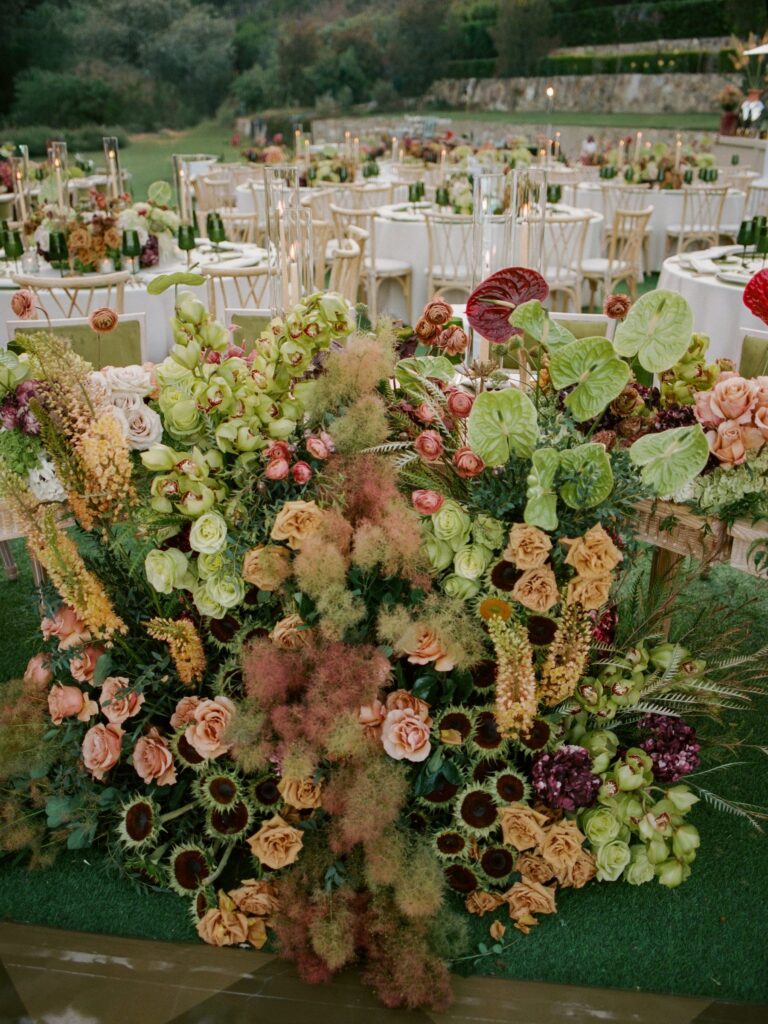
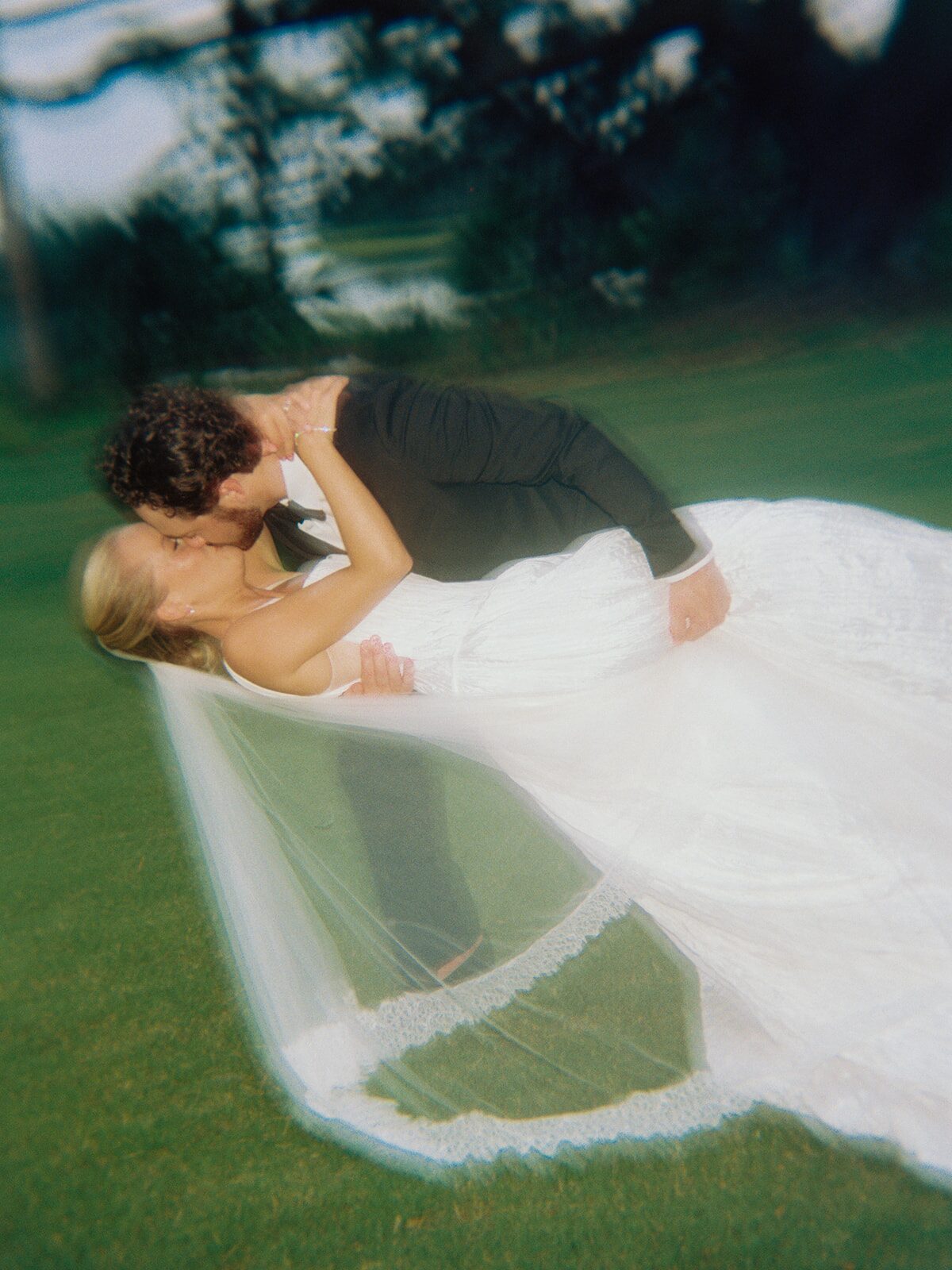
Sending my film for Frontier scans shaped so much of how I see color, and over the years I brought what I love about those scans into how I edit my digital images. That became my presets: rich in color, in my signature style, and made to sit beautifully alongside your film.
How I shoot and send film for my weddings
I have photographed weddings for about seven years, from North Carolina to Italy, Norway and Thailand, with film and digital side by side the whole time. Here is my own routine, in case it is helpful.
- I shoot 35mm and 120, almost always Kodak Portra 400 and Portra 800.
- I shoot at box speed, meter in camera, and expose a half to a full stop over.
- I number my rolls as I go, and I ask the lab to keep that order when they scan.
- I order custom, large TIFF scans, on the Frontier when the lab offers it, with no sprocket holes. Borders only sometimes, usually on 120.
- I upload a few of my edited digital images from the same wedding with each order, so the lab can match the color I love.
- I choose regular turnaround for most weddings and same day rush only for a large wedding.
- My favorite labs right now are theFINDlab in Utah and Picturehouse in New York, and Carmencita when I am working in Europe.
How to choose a film lab
The best lab is the one whose scans look like your work, and whose prices and turnaround fit how you deliver galleries. Send the same kind of roll to two or three labs, compare the color on skin and greens, and pay attention to how they communicate. Once you find your lab, stay with them so they learn your look.
Film pricing questions photographers ask
How much should I charge for film at a wedding?
There is no single right number, because it depends on your lab, your film stocks and how many rolls you shoot. Start with your true cost, add the profit that fits where you are with film, and divide by the number of rolls for a per roll price. In the example above, that comes to about $65 a roll at 20 percent.
How many rolls of film should I shoot at a wedding?
It depends on how film fits your coverage. A roll of 35mm holds about 36 images and a roll of 120 holds 10 to 16, depending on the camera. As a starting point, a few rolls cover film portraits or a session, around 10 to 12 rolls weave film through a wedding day, and a film-heavy wedding weekend can run 25 rolls or more. Start with the moments you love most on film and price from there.
Should I charge differently for 35mm and 120?
You can, since 120 often costs a little less to process but gives you fewer images per roll. Many photographers keep one simple per roll price and let the math balance out across the wedding.
Do I price black and white film differently?
Black and white film and processing are often priced differently from color, so run the numbers for both. In the calculator, pick the black and white film stocks you shoot alongside your color ones, and it prices each one on its own.
What if a couple wants a very large print from a film image?
Ask your lab to rescan that single image at its highest resolution. It is usually a small fee, and you can include it in the print price.

Is Ektacolor Pro the same as Portra?
Yes, it is the same film in a new box. Eastman Kodak has always made Portra, but the Portra name belongs to Kodak Alaris, the company that has distributed Kodak's still film since 2012. On March 24, 2026, Eastman Kodak began selling the same emulsions directly under its own historic names: Ektacolor Pro 160, 400 and 800. The black and white T-Max films became Ektapan in the same change. Both boxes are expected to sit on shelves side by side for a while. The look and how your lab handles them are the same, so price whichever box you actually buy.
Should film be an add-on or part of my collections?
Either works. An add-on lets couples choose film and shows its value plainly. Building it into your collections makes film part of how you work. If film is central to your style, building it in often feels the most natural, and the number underneath is the same: your true cost, plus your profit.
Your next step
Wherever you are with film, here is where I would go next, in the order most photographers need it.
See your own numbers. My Film Pricing Calculator walks you through it in seven short steps: pick your lab and the film stocks you shoot, set your rolls, add your extras and choose your profit. It shows your true cost, what to charge, what you take home and a per roll price you can quote with confidence, and you can save each wedding by name to come back to.
The Film Pricing Calculator opens soon. Follow along on Instagram at @hannahrosserphotography to hear the day it goes live.
Bring your film and digital together. My presets were made from years of editing my own digital images to sit beside my film scans: rich, true color, greens that stay green, skin that comes first, and highlights that roll off softly.
Talk film with me, one on one. My Business Starter mentorship call is a 90 minute conversation, and you are welcome to spend all of it on film: pricing it, shooting it, choosing a lab, editing your digital to sit beside it, and booking more of the couples who love it. Bring every question you have.
If this guide helped you, I would love to hear about it. Send me a message on Instagram at @hannahrosserphotography with your numbers or your favorite film image.
About Hannah
I am Hannah Rosser, a film and documentary wedding photographer based in Raleigh, North Carolina, photographing weddings across the United States and abroad. My work blends film and digital with flash and natural light, and it has been featured in Carats & Cake, The New York Times and People. I also mentor wedding photographers on film, pricing and building a business they love.
Planning your own wedding and dreaming of film? I would love to hear about your day.
